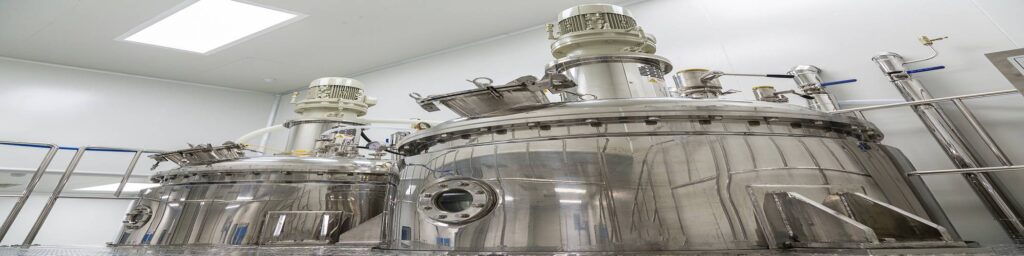
Pressure Vessel Fabrication
Pressure Vessel Fabrication Services at Holdens Engineering
Holdens Engineering is a long-established UK manufacturer of precision-engineered pressure vessels for industrial and commercial use. The company’s fabrication capabilities are backed by decades of expertise in delivering vessels that meet the rigorous requirements of sectors including chemical processing, oil and gas, energy, and utilities. Holdens operates from a dedicated facility equipped to manage complex fabrication projects to recognised UK and international standards.
In-House Fabrication Expertise
All pressure vessel fabrication at Holdens is carried out in-house. This allows full control over quality, scheduling, and compliance. The company employs time-served fabricators, coded welders, and qualified inspectors who work as part of an integrated manufacturing team. Each project is overseen by experienced project engineers and quality assurance personnel, ensuring adherence to the relevant fabrication code from start to finish. Fabrication activities are supported by Holdens’ design and draughting team, who use advanced CAD and FEA tools to produce detailed drawings and stress analysis reports. The integration between design and fabrication ensures that all drawings are manufacture-ready and aligned with material specifications and production methods.
Material Sourcing and Traceability
Holdens sources materials from approved suppliers with full certification and traceability. The company regularly works with a range of ferrous and non-ferrous metals including carbon steel, stainless steel, duplex stainless, and high-performance alloys such as Hastelloy and Inconel, depending on the operating environment of the vessel.
Material traceability is maintained through the fabrication process using a structured QA system. All heat numbers, batch records, and test certifications are logged and linked to the final product, providing clients with a comprehensive material record that supports regulatory and insurance compliance.
Welding and Joint Preparation
Welding is a critical part of pressure vessel fabrication, and Holdens places strong emphasis on welding integrity and process control. The company’s welders are qualified to ASME IX, BS EN ISO 9606-1, and other relevant welding standards, ensuring that all welds meet the strength and fatigue resistance required for pressure containment. Before welding, surfaces are cleaned and prepared to minimise the risk of inclusions or porosity. Joint configurations are designed to suit the welding process—typically TIG, MIG, or MMA—depending on the thickness and material. Where necessary, pre-heating or post-weld heat treatment (PWHT) is applied to relieve residual stresses and improve metallurgical structure.
Non-Destructive Testing (NDT)
As part of its fabrication process, Holdens carries out non-destructive testing on all pressure vessels, either in-house or through accredited third-party providers. This includes:
- Visual inspection of weld seams
- Radiographic testing (RT) for internal discontinuities
- Ultrasonic testing (UT) for thickness and flaw detection
- Magnetic particle inspection (MPI) for surface cracks
- Dye penetrant inspection (DPI) for fine surface defects
All NDT results are recorded and issued with the final documentation pack, and testing can be witnessed by independent inspection bodies if required.
Compliance with Pressure Vessel Standards
Holdens fabricates vessels in accordance with a range of internationally recognised design codes and standards, including:
- PD5500 (UK standard)
- ASME Section VIII Division 1
- EN 13445 (European standard)
- API and client-specific requirements
Each vessel is designed to match the applicable pressure, temperature, and corrosion allowances of the intended application. Design review and verification are performed to confirm compliance with the selected standard, and Holdens liaises directly with notified bodies and third-party inspection agencies to secure approvals where applicable.
Finishing and Assembly
Following fabrication, vessels are shot-blasted and coated according to client specification. Surface protection options include high-performance paint systems, epoxy coatings, or linings suitable for chemical exposure. Stainless steel vessels may be bead-blasted or passivated to improve corrosion resistance and surface finish.
Where required, Holdens also handles the fitting of internal components, baffles, manways, flanges, nozzles, and instrumentation ports. The company can also assemble vessel skids with associated pipework and supports, providing a ready-to-install solution for clients seeking reduced site work.
Factory Acceptance Testing and Documentation
Before leaving the workshop, each pressure vessel undergoes final inspection and factory acceptance testing (FAT). This includes dimensional checks, weld verification, hydrostatic pressure testing, and verification of all nozzles and accessories.
A full documentation package is prepared to accompany every vessel. This typically includes:
- GA and fabrication drawings
- Welding procedures and welder qualifications
- Material certificates (EN 10204 3.1 or 3.2)
- NDT and pressure test reports
- CE/UKCA declarations (if applicable)
- Operating and maintenance manuals (if specified)
Documentation is formatted to match client or project requirements and can be provided in both digital and hard copy format.
A Trusted Fabrication Partner
Holdens Engineering’s pressure vessel fabrication service is defined by technical competence, regulatory understanding, and consistent delivery. By keeping fabrication in-house and maintaining strong quality assurance systems, the company offers reliability across every stage of manufacture. Whether for a single vessel or a multi-unit order, Holdens provides high-quality fabricated vessels ready for installation and operation in demanding environments.