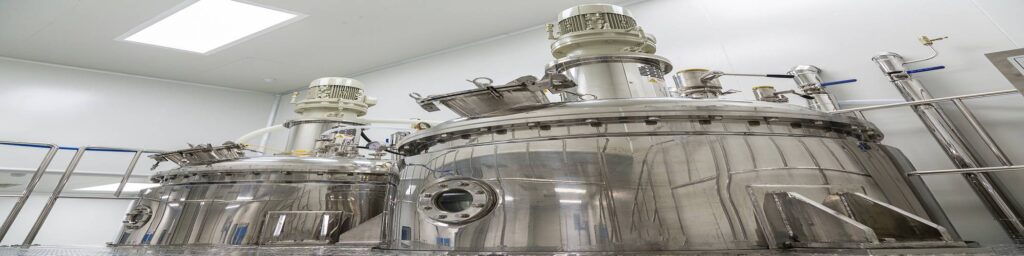
Pressure Vessel Design
Pressure Vessel Designers – Holdens Engineering
Holdens Engineering offers a complete pressure vessel design service, delivering engineered solutions that comply with recognised UK and international codes. With in-house design expertise and decades of experience, Holdens provides pressure vessels that meet operational demands, industry standards, and safety regulations across multiple sectors, including energy, petrochemicals, manufacturing, and utilities.
Technical Pressure Vessel Design Capabilities
Holdens’ pressure vessel design service is led by a team of mechanical engineers and draughts people with extensive experience in pressure system calculations, code compliance, and fabrication optimisation. All vessels are designed using specialist software such as PV Elite, Compress, and SolidWorks, enabling precise calculation of stresses, tolerances, and load conditions. The design process begins with a full technical consultation to define operating pressures, temperature ranges, contents, and functional requirements. From this, Holdens develops a custom design aligned with the project specifications, including:
- Internal and external pressure parameters
- Corrosion allowances
- Design life
- Fatigue conditions (e.g. cyclic loads or pressure fluctuation)
- Wind, seismic, and transport loadings (if applicable)
Where required, Holdens also conducts finite element analysis (FEA) to evaluate localised stresses around nozzles, support brackets, or complex geometries.
Design Code Compliance
All pressure vessel designs produced by Holdens conform to established codes and directives. These include:
- PD5500 – Specification for unfired pressure vessels (UK standard)
- ASME Section VIII Division 1 – Rules for Construction of Pressure Vessels
- EN 13445 – European standard for unfired pressure vessels
- The Pressure Equipment (Safety) Regulations 2016 (UK)
- Pressure Equipment Directive (PED) 2014/68/EU (for CE marking)
Designs are reviewed and certified either internally or by a notified body, depending on the category of equipment. Where vessels are classified under PED Category III or IV, Holdens manages liaison with the notified body and integrates their feedback into the design approval process.
Custom-Built for Application
Unlike off-the-shelf options, pressure vessels designed by Holdens are fully customised to their intended application. Designs can accommodate a wide variety of process requirements, including:
- Horizontal or vertical orientation
- Single- or multi-compartment layouts
- Jackets and coils for heating/cooling
- Internal baffles, dip pipes, or deflectors
- Mounting flanges for level gauges, transmitters, or manways
- Safety relief devices and inspection points
This custom approach ensures that the finished vessel integrates seamlessly into the client’s process layout, and that safety, efficiency, and longevity are prioritised throughout.
Material Selection and Corrosion Protection
As part of the design phase, Holdens provides guidance on material selection based on the vessel’s contents and service conditions. Materials are selected to meet the required mechanical strength, corrosion resistance, and lifecycle expectations. Options include:
- Carbon steel
- Stainless steel (304, 316, 316L, etc.)
- Duplex and super duplex
- High-performance alloys such as Hastelloy, Inconel, and Monel
Holdens also accounts for internal linings, coatings, or cathodic protection systems as part of the design if specified for chemical containment or corrosive environments.
Integration with Fabrication
Because Holdens also manufactures pressure vessels in-house, the design process is closely aligned with fabrication requirements. This ensures all components are designed for ease of manufacture, accurate fit-up, and efficient assembly. Weld preparation, nozzle projections, skirt/baseplate designs, and lifting arrangements are all developed in parallel with manufacturing plans to streamline the production phase.
Where third-party fabricators are used, Holdens provides detailed fabrication drawings, weld maps, and general arrangement drawings in both hard and digital formats, along with any required QA documentation to support production.
Design for Inspection and Maintenance
In addition to structural and process requirements, Holdens designs vessels with future inspection and maintenance access in mind. Nozzles, access hatches, and lifting lugs are positioned for safe and practical use. Support is also provided for pressure relief valve sizing, burst disc placement, and compliance with Health and Safety Executive (HSE) recommendations for pressure systems. Designs can include corrosion allowance indicators, internal coatings, and data plate mounting, along with documentation for Written Schemes of Examination (WSE) as required under the Pressure Systems Safety Regulations 2000 (PSSR).
Pressure Vessel Documentation and Certification
Once design is complete, Holdens supplies a full design dossier that may include:
- General Arrangement (GA) drawings
- Design calculations and stress analysis
- FEA reports (if applicable)
- Welding and fabrication guidelines
- Material specifications
- Compliance declarations (CE/UKCA)
- Risk assessments and design validation notes
This documentation supports client project records, insurance requirements, and legal compliance.
Trusted Pressure Vessel Design Partner
Holdens Engineering has become a trusted design partner for clients requiring pressure vessels with long service life, operational reliability, and full traceability. The company’s multi-disciplinary design team delivers accurate and practical solutions for both simple and complex pressure vessel projects, offering flexibility and engineering support from concept to sign-off.
Whether working from a set of process requirements or reverse-engineering an existing unit, Holdens applies a detailed and technical approach that ensures each vessel is fit for purpose, safe, and compliant from day one